What to put in a go bag
30 things, in a waterproof bag anyone in the house can lift, kept somewhere you can grab on the way out.
Written for the Philippines. Emergency numbers are on their own page.
The list below is UNICEF Philippines' emergency go-bag checklist. Their version is in Taglish and gives the items on their own; this one gives the same items in English with a line saying what each is doing in the bag, because an item you understand is an item you replace when it runs out. Nothing has been added to their list and nothing has been dropped.
Source: UNICEF Philippines, Emergency Go-Bag checklist. Read 20 September 2026.
If you pack nothing else, pack these 10
Every one of them is on UNICEF's list. They are the ones that stop a bad night becoming a dangerous one.
- Drinking water Mains water goes off or turns unsafe long before it comes back on.
- Ready-to-eat food that will not spoil Crackers, canned goods, biscuits. Nothing that needs a stove.
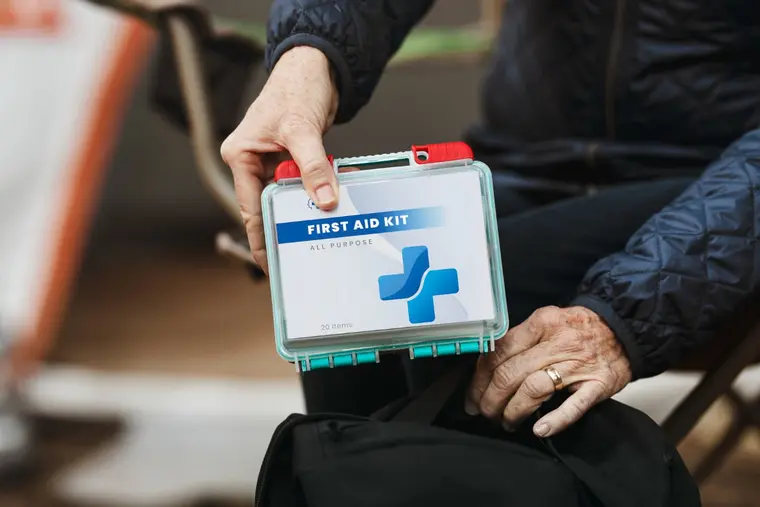
- A small first aid kit Alcohol, plasters, antiseptic, bandages, tweezers.
- A torch, crank or battery Power cuts outlast the storm. A crank one never runs flat.
- A charged power bank Your phone is the radio, the map and the way your family finds you.
- A whistle for every person, children included Sound carries through rubble and water when a voice does not.
- A written list of emergency numbers, including your barangay and LGU A dead phone takes your contacts with it.
- Antibacterial soap Handwashing is the one thing that keeps a crowded shelter from getting sick.
- Cash in small notes Card terminals and ATMs go down with the power.
- Government-issued IDs Relief lists and evacuation registers ask for one.
The full list
Four groups, 30 items. Print it, or work down it with the bag open on the floor.
Water, food and medicine
- Drinking water Mains water goes off or turns unsafe long before it comes back on.
- Ready-to-eat food that will not spoil Crackers, canned goods, biscuits. Nothing that needs a stove.
- A small first aid kit Alcohol, plasters, antiseptic, bandages, tweezers.
- Medicine for fever, cough, colds and diarrhoea Evacuation centres get crowded and stomach bugs move fast.
- Any prescription your household takes Refills are the first thing that becomes impossible.
- A thermometer Tells you whether a fever needs a queue at the health centre.
- Vitamins and baby medicine Listed separately by UNICEF because infant doses are not adult doses.
Tools
- A torch, crank or battery Power cuts outlast the storm. A crank one never runs flat.
- A charged power bank Your phone is the radio, the map and the way your family finds you.
- A whistle for every person, children included Sound carries through rubble and water when a voice does not.
- A portable radio Bulletins keep coming when the mobile network is down.
- Candles and matches A backup to the torch, for a long night.
- A raincoat Being wet for two days is how a bad week becomes an illness.
- Rope Tying a tarpaulin, hauling a bag, marking a route.
- A blanket Evacuation centres are concrete floors and electric fans.
- Notebook and pencil A pencil writes when wet and needs no battery.
- A written list of emergency numbers, including your barangay and LGU A dead phone takes your contacts with it.
- A toy or comfort object for each child UNICEF puts this in the tools group. It is not a soft touch; a settled child is a child you can move.
Toiletries
- Antibacterial soap Handwashing is the one thing that keeps a crowded shelter from getting sick.
- Toothbrush and toothpaste
- Spare clothes One change per person, packed dry.
- Mosquito repellent Standing water after a flood brings dengue with it.
- Menstrual pads Evacuation centres rarely stock them.
- Nappies and wet wipes for babies
- A face mask and hand sanitiser UNICEF lists this as a COVID-19 safety kit; the same items serve for ashfall and dust.
Documents and cash
- Cash in small notes Card terminals and ATMs go down with the power.
- ATM card or passbook
- Government-issued IDs Relief lists and evacuation registers ask for one.
- An ID card showing your blood type and an emergency contact For the moment you cannot answer for yourself.
- Passports, birth and marriage certificates, land and insurance papers, medical records Copies in a sealed plastic bag. Replacing them takes months.
Source: UNICEF Philippines, Emergency Go-Bag checklist. Read 20 September 2026.
What changes for each hazard
One bag covers all four. These are the small differences worth making once you know what is coming.
- Typhoon
- Waterproofing matters more than weight. Double-bag the documents, pack the raincoat on top, and put the bag somewhere above the highest water your street has seen.
- Earthquake
- Keep shoes and a torch by the bed. Broken glass and an unlit stairwell are what actually stop people getting out of a building.
- Volcanic eruption
- Ashfall is the part that reaches far past the danger zone. Add masks, goggles and long sleeves, and keep the bag itself closed.
- Flood
- Keep the bag upstairs or high on a shelf. A bag under the stairs is the first thing the water finds.
Where to keep it, and when to check it
UNICEF gives three instructions about the bag itself rather than its contents, and they are the ones households get wrong. Use a waterproof bag. Make sure anyone in the family can carry it, which usually means packing lighter than feels sensible. Keep it somewhere it can be picked up on the way out, so not the back of a wardrobe and not under a bed.
Check it twice a year. Water, batteries, medicine and baby supplies all expire or get borrowed, and a bag nobody has opened since it was packed is a bag of out-of-date food. Pick two dates you will remember anyway.
Copy the numbers for the written list
Source: UNICEF Philippines, Emergency Go-Bag checklist. Read 20 September 2026.