
Earthquakes: what to do before, during and after
Duck, cover and hold on. Stay inside if the building is sound, get to open ground if you are outside, and get to high ground if you are near the shore.
Written for the Philippines. In an emergency here, the number is 911.
An earthquake gives no warning at all, so everything that helps was done weeks earlier: a cabinet bolted to a wall, shoes under the bed, a drill the family has actually walked through. PHIVOLCS publishes the national guidance, and the three sections below follow it.
Before
PHIVOLCS puts it plainly: the key to effective disaster prevention is planning.
- Know the earthquake hazards in your area.
- Follow structural design and engineering practice when building a house.
- Have the soundness of your building checked, and strengthen or retrofit it if it needs it. PHIVOLCS runs a free self-assessment tool called How Safe is my House?
- Strap or bolt heavy furniture and cabinets to the walls.
- Check the stability of hanging objects like ceiling fans and chandeliers.
- Store breakable items, harmful chemicals and flammable materials on the lowest secured shelves.
- Learn your exit routes, and where the fire extinguishers, first aid kits and alarms are.
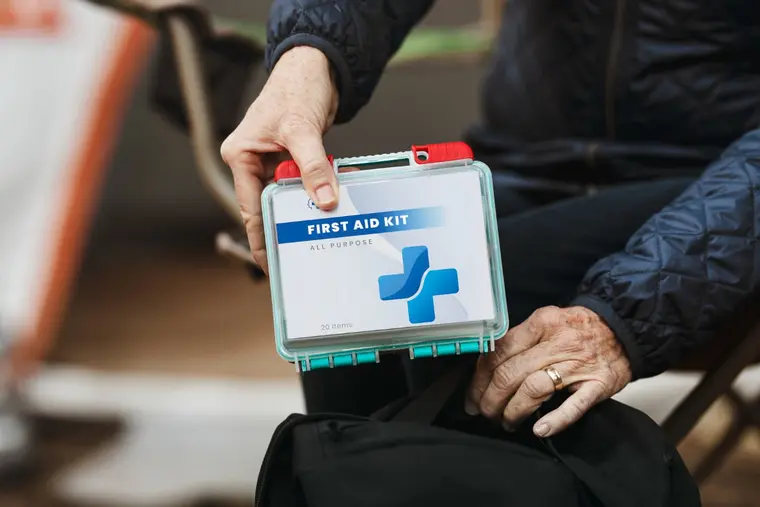
- Prepare an emergency supply kit. PHIVOLCS lists a first aid kit, canned food and a can opener, water, clothing, a blanket, a battery radio, torches and spare batteries.
- Run earthquake drills, and take part in them.
Source: PHIVOLCS, Earthquake Preparedness Guide: what to do Before, During and After an earthquake (published June 2009 by DOST-PHIVOLCS). Read 20 September 2026.
During
Stay calm. What you do depends entirely on where you are standing.
- Inside a structurally sound building: stay there. Do the duck, cover and hold. Get under a sturdy desk or table and hold on to it, or protect your head with your arms. If you can do it quickly, open the door for an exit.
- Stay away from glass windows, shelves, cabinets and other heavy objects.
- Beware of falling objects. Be alert and keep your eyes open.
- Outside: move to an open area. Away from trees, power lines, posts and concrete structures. Move away from steep slopes, which landslides can take.
- Near the shore: move quickly to higher ground. PHIVOLCS is explicit that a tsunami might follow a strong earthquake felt near the coast. Do not wait to be told.
- In a moving vehicle: stop and get out. Do not attempt to cross bridges, overpasses or flyovers, which may have been damaged.
Source: PHIVOLCS, Earthquake Preparedness Guide: what to do Before, During and After an earthquake (published June 2009 by DOST-PHIVOLCS). Read 20 September 2026.
After
Be prepared for aftershocks. Once the shaking stops, take the fastest and safest way out of the building.
- Do not use lifts, enter damaged buildings, or tie up the phone lines. PHIVOLCS lists all three, and adds a fourth: do not panic.
- Check yourself and others for injuries.
- Check the water and electrical lines for damage.
- Check for chemical, toxic and flammable spills, and control fires before they spread.
- If you have to leave home, leave a message saying where you are going. And take the emergency supply kit with you.
- Keep up with instructions on a battery-operated radio.
Source: PHIVOLCS, Earthquake Preparedness Guide: what to do Before, During and After an earthquake (published June 2009 by DOST-PHIVOLCS). Read 20 September 2026.
The Philippines measures shaking on its own scale
Reports here use the PHIVOLCS Earthquake Intensity Scale, written PEIS, which runs from Intensity I to Intensity X and describes what people felt and what broke. That is a different thing from magnitude, which is one number for the whole earthquake.
The practical version: magnitude describes the earthquake, intensity describes your street. Two towns the same distance apart can report very different intensities from the same quake.
Source: PHIVOLCS, PHIVOLCS Earthquake Intensity Scale. Read 20 September 2026.
Pack the bag once
Every section above assumes a bag is already packed. There is one list on this site and it covers all four hazards, with UNICEF Philippines named as its source.
The other hazards on this site
- Volcanic eruptions: what to do before, during and after
Stay out of the danger zone PHIVOLCS has drawn, and treat ashfall as the part that reaches you: cover your nose and mouth, close the house up, and get ash off the roof before it rains.
- Typhoons: what to do before, during and after
Watch the wind signal PAGASA has raised over your province, get the go bag and the documents above the water line, and go when your barangay says go.