
Typhoons: what to do before, during and after
Watch the wind signal PAGASA has raised over your province, get the go bag and the documents above the water line, and go when your barangay says go.
Written for the Philippines. In an emergency here, the number is 911.
PAGASA raises a wind signal over a province hours before the wind arrives, and the number tells you how much warning you have left. Signal 1 buys you a day and a half. Signal 5 buys you twelve hours. Most of what follows has to be finished in that window, which is why a household that has already packed is a household that only has to leave.
What each PAGASA wind signal means
| Signal | Wind | Warning lead time |
|---|---|---|
| 1 | 39 to 61 km/h | 36 hours |
| 2 | 62 to 88 km/h | 24 hours |
| 3 | 89 to 117 km/h | 18 hours |
| 4 | 118 to 184 km/h | 12 hours |
| 5 | 185 km/h or higher | 12 hours |
Two things about the scale are easy to miss, and PAGASA states both. A signal describes the general wind over a province, so the wind on a ridge or an exposed shore can be a good deal stronger than the number suggests. And the levels can skip: a province on Signal 1 can go straight to Signal 3 without passing through 2.
Source: PAGASA, Tropical Cyclone Wind Signal (system in use since 23 March 2022). Read 20 September 2026.
Before
While the signal is still low.
- Monitor the news for weather updates, warnings and advisories.
- Know your community’s early warning and evacuation plan.
- Check the integrity of your house and repair weak parts.
- Prepare the family go bag. The full list is on the go bag page.
- Put livestock and pets in a safe area, or the evacuation site set aside for animals.
- When notified, go to the designated evacuation centre immediately.
Source: Quezon City DRRMO, What to Do In Case of Tropical Cyclone (last updated 18 September 2026). Read 20 September 2026. A city-government guide. The household steps apply anywhere in the country; the 122 helpline is Quezon City’s own, so use 911 or your own LGU number elsewhere.
During
While the wind and rain are on you.
- Stay calm. Stay indoors and keep the news on.
- Turn off the main electrical switch and the water valve.
- Use a torch or an emergency lamp. Be careful with candles and gas lamps.
- Stay away from glass windows.
Source: Quezon City DRRMO, What to Do In Case of Tropical Cyclone (last updated 18 September 2026). Read 20 September 2026. A city-government guide. The household steps apply anywhere in the country; the 122 helpline is Quezon City’s own, so use 911 or your own LGU number elsewhere.
After
The hours after the wind drops are when most avoidable injuries happen.
- Wait for the authorities to declare it safe before you go home.
- Stay away from fallen trees, damaged structures and power lines.
- Do not go sightseeing. It gets in the way of the emergency services.
- Be careful checking and repairing damaged parts of the house.
- Check for wet or submerged outlets and appliances before turning the electricity back on.
- Empty the rainwater out of cans, pots and tyres. Standing water is where mosquitoes breed.
Source: Quezon City DRRMO, What to Do In Case of Tropical Cyclone (last updated 18 September 2026). Read 20 September 2026. A city-government guide. The household steps apply anywhere in the country; the 122 helpline is Quezon City’s own, so use 911 or your own LGU number elsewhere.
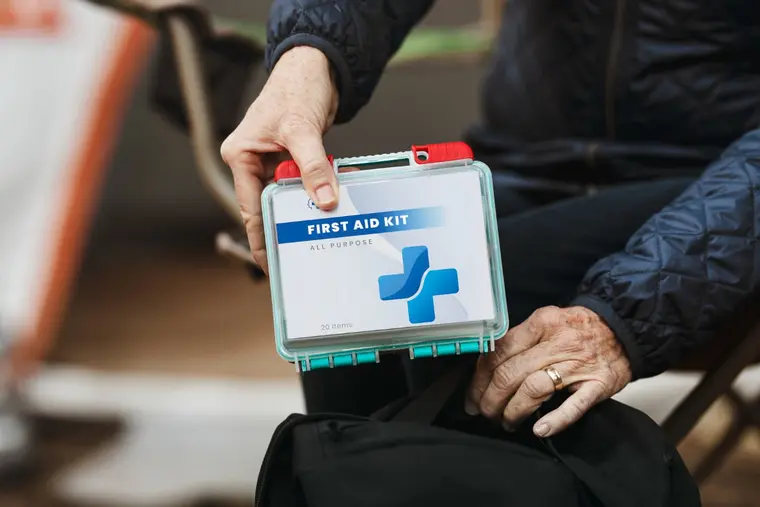
Pack the bag once
Every section above assumes a bag is already packed. There is one list on this site and it covers all four hazards, with UNICEF Philippines named as its source.
The other hazards on this site
- Floods and landslides: what to do before, during and after
Get the go bag and anything that matters above the water line, kill the power before you leave, and do not walk or drive into floodwater.
- Earthquakes: what to do before, during and after
Duck, cover and hold on. Stay inside if the building is sound, get to open ground if you are outside, and get to high ground if you are near the shore.