
Volcanic eruptions: what to do before, during and after
Stay out of the danger zone PHIVOLCS has drawn, and treat ashfall as the part that reaches you: cover your nose and mouth, close the house up, and get ash off the roof before it rains.
Written for the Philippines. In an emergency here, the number is 911.
Two different things happen in an eruption and they reach different distances. Close in there is a danger zone that PHIVOLCS draws and the local government enforces. Much further out there is ash, which is what most households actually deal with, and which does its worst damage quietly, by piling up on a roof until rain makes it heavy enough to bring the roof down.
PHIVOLCS alert levels
| Level | What it means | What PHIVOLCS recommends |
|---|---|---|
| 0 | Quiet, or no alert. Everything monitored is at background levels. | No eruption foreseen. Explosions, rockfalls and landslides can still happen suddenly inside the Permanent Danger Zone. |
| 1 | Low level of unrest. Slightly more volcanic earthquakes and steam, hot springs warming, the slope swelling a little. | Entry into the Permanent Danger Zone must be prohibited. |
| 2 | Moderate unrest. Raised earthquake, gas or deformation readings, intermittent steam and ash explosions. | Magma may be pushing up at depth. Entry into the Permanent Danger Zone must be prohibited, and the danger zone may be widened. |
| 3 | High unrest. Sustained earthquakes, tremor, rumbling, forceful ash ejections, possibly dome growth or lava. | Magma is near or at the surface and a hazardous eruption is possible within weeks. Danger zones may be expanded. |
| 4 | Hazardous eruption imminent. Earthquake swarms and tremor, many of them felt. Frequent strong ash explosions, dome growth or lava flow. | A magmatic or effusive eruption is underway and can progress into a highly hazardous one. The danger zone may be extended to nine kilometres or more from the active crater. |
| 5 | Hazardous eruption in progress. Tall ash columns, or the summit dome collapsing, with pyroclastic flows, surges and widespread ashfall. | A life-threatening eruption. Further danger areas may be declared as it goes on. |
The radius of a danger zone is not the same for every volcano, and it changes as the alert level changes. The number that matters is the one in the current PHIVOLCS bulletin for your volcano, and never a figure remembered from the last eruption. The table above is the scheme as PHIVOLCS publishes it for Bulusan; the criteria and the distances are set volcano by volcano.
Source: PHIVOLCS, Volcano Alert Levels. Read 20 September 2026.
Before
When an eruption looks likely and ash could reach you.
- Listen to the radio for updates.
- Put a mask or clean cloth, candles, matches, torches and spare batteries somewhere you can reach. PHIVOLCS names each of these.
Source: PHIVOLCS, What to do Before, During and After an Ashfall (DOST-PHIVOLCS, printed with support from DOST-GIA). Read 20 September 2026.
During
Stay calm.
- Cover your nose and mouth with a damp clean cloth or a mask.
- As soon as the ashfall eases, scrape the ash off the roof. Ash that sits there and then gets rained on is heavy enough to collapse a roof. This is the instruction in the guide that most people skip.
- Keep the radio on for updates on the eruption.
- Close all the windows and doors of the house and the car.
- Keep pets in their shelter or inside, so they do not breathe ash.
- Cover water containers and food.
- Wash all fruit and vegetables thoroughly before eating.
- Outdoors: find shelter and wear glasses to protect your eyes. Take contact lenses out.
- Driving in heavy ashfall: pull to the side of the road and stop.
Source: PHIVOLCS, What to do Before, During and After an Ashfall (DOST-PHIVOLCS, printed with support from DOST-GIA). Read 20 September 2026.
After
Clearing ash badly spreads it. The guide is specific about method.
- Once the ash is off, wash the roof and gutters with water to stop corrosion.
- Vacuum or shake ash off furniture before dusting, with your nose and mouth covered.
- Hose glass windows, doors and the car before washing them with soap and lukewarm water.
- Use powder detergent for clothes that have ash on them.
- Shake loose ash off plants before you water them.
- Put the collected ash somewhere well away from drainage. Ash washed into a drain clogs it, and the flooding arrives later.
Source: PHIVOLCS, What to do Before, During and After an Ashfall (DOST-PHIVOLCS, printed with support from DOST-GIA). Read 20 September 2026.
Why ash is the part that reaches you
PHIVOLCS describes fine volcanic ash as respirable, which is to say small enough to reach the lungs, and links prolonged exposure to pulmo-respiratory disease. The same ash carries soluble salt that harms plants and is acid-bearing enough to corrode metal and wreck an air conditioner, a fridge or a television.
The coarse fragments land near the volcano. The further out you are, the finer the ash gets, and fine ash travels a long way.
Source: PHIVOLCS, What to do Before, During and After an Ashfall (DOST-PHIVOLCS, printed with support from DOST-GIA). Read 20 September 2026.
Pack the bag once
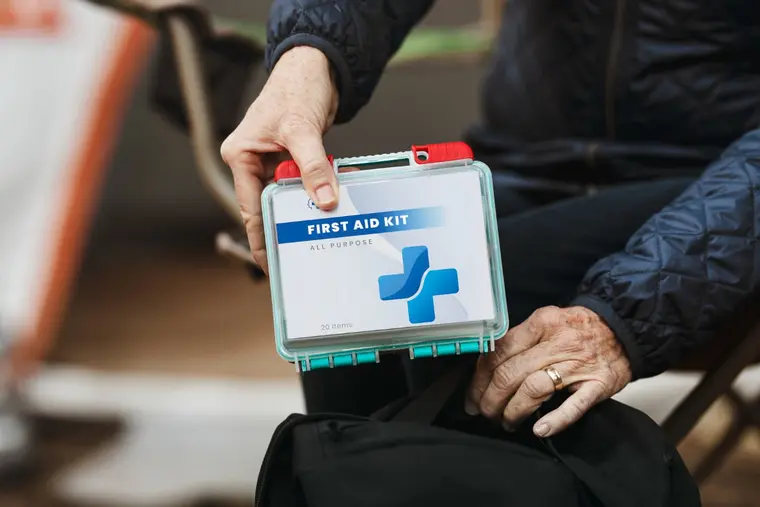
Every section above assumes a bag is already packed. There is one list on this site and it covers all four hazards, with UNICEF Philippines named as its source.
The other hazards on this site
- Earthquakes: what to do before, during and after
Duck, cover and hold on. Stay inside if the building is sound, get to open ground if you are outside, and get to high ground if you are near the shore.
- Typhoons: what to do before, during and after
Watch the wind signal PAGASA has raised over your province, get the go bag and the documents above the water line, and go when your barangay says go.